Date Published: 09/22/11
Terrorism can't intimidate Nigeria says Jonathan
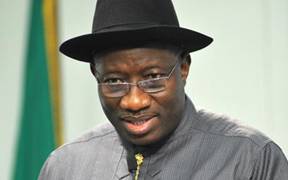 |
President Goodluck Jonathan |
The President talked tough against terrorism yesterday.
Dr. Goodluck Jonathan chose the world stage to hit at the increasing use of terror as a form of political action.
Terrorism poses a serious threat to international peace and security, he said.
President Jonathan spoke in an address to the United Nations General Assembly in New York.
He said the present height of terrorism has eroded the joy that greeted the end of the cold war, which many taught would lead to peace.
He said the current situation on the global level is becoming more precarious, unpredictable and certainly more dangerous perhaps more than any other time in history.
He also spoke on Nigeria’s share of terrorist attacks, saying the upsurge rather than intimidate, will only help to strengthen the country’s resolve to develop appropriate national strategies and collaborate even more closely with the international community to fight the menace.
He told the world leaders about his signing into law, the law on Terrorism (Prevention) Bill 2011 and the Anti-Money Laundering (Prohibition) Amendment Act. He said those laws will not only outline measures for the prevention and combating of acts of terrorism, they will prohibit the financing of terrorism and laundering of the proceeds of crime in Nigeria.
He assured that Nigeria will continue to work with the UN and other partners in terrorism fight.
Jonathan who spoke on the Theme “The role of mediation in the peaceful resolution of conflicts in the world”, said the war against terrorism is one that must be won as it infringes on the fundamental rights of all peoples to life and to live in safety from fear.
He said for the world to move from a culture of response after conflict to that of a culture of prevention, the international community must muster the political will to promote preventive diplomacy, in particular through mediation.
This, he argued will necessarily entail re-dedicating greater human and financial resources to institutions and mechanisms that already exist within and outside the UN system for conflict prevention and resolution.
On the way forward, the President wants the UN to establish a Conflict Mediation Commission, which should be saddled with the responsibility of collating information on conflict situations across the world, identify the dramatis personae and develop appropriate strategies for initiating resolution of such conflicts.
The Commission, he said, should develop rules of engagement, including sanctions which would apply to those who may obstruct efforts to resolve conflicts peacefully.
Jonathan also spoke on trafficking in Small Arms and Light Weapons (SALW). He said it is an issue that must be seriously tackled if the idea of mediation in conflicts is to succeed.
He said, “Mr. President, despite our initial optimism, the peace dividend we had hoped would accrue following the end of the Cold War is yet to materialize. On the contrary, the world of the 21st century in which we live is becoming ever more precarious, unpredictable and certainly more dangerous perhaps more than any other time in history.
The increasing use of terror in various regions of the world as a form of political action poses serious threat to international peace and security. We must win the war against terrorism because it infringes on the fundamental rights of all peoples to life and to live in safety from fear.
“Over the past few months, we in Nigeria have faced an upsurge of terrorist attacks in parts of our country. Only recently, the UN Building in Abuja housing several UN Agencies was the target of an atrocious terrorist attack which left people dead. On behalf of the Government and people of Nigeria, I like to convey my sincere condolences to the families of the victims and to the entire UN family for this barbaric and heinous attack against those who have dedicated their lives to helping others.
As the United States and the rest of the world commemorate the 10th anniversary of 9/11, we are reminded of the international dimension of terrorism and the imperative of a concerted global response to combat this scourge.
“Mr. President, for us in Nigeria, terrorist acts, rather than intimidate, will only help to strengthen our resolve to develop appropriate national strategies and collaborate even more closely with the international community in the fight against this menace. As part of Nigeria’s efforts to fight terrorism, I signed into law the Terrorism (Prevention) Bill 2011 and the Anti-Money Laundering (Prohibition) Amendment Act on the 3rd of June this year. The new laws not only outlined measures for the prevention and combating of acts of terrorism, but also prohibit the financing of terrorism and laundering of the proceeds of crime. Nigeria will continue to work with the UN and other partners in this global fight.
“To this end, Nigeria is working closely with the United Nations Counter Terrorism Implementation Task Force (CTITF), the Counter Terrorism Executive Directorate (CTED), as well as relevant international bodies and friendly countries to sharpen our response mechanisms. In this connection, the UN Counter Terrorism Implementation Task force is launching its first project in Abuja in November 2011, aimed at conflict prevention and countering the appeal of terrorism to youth through education and dialogue. In addition, Nigeria is a member of the new global body, the Global Counter-Terrorism Forum (GCTF), initiated to galvanize and pull our efforts together to fight the scourge in all its ramifications. We pledge to continue to work with all stakeholders, as we enlarge and intensify our partnerships.”
Speaking on this year’s theme which he said was apt, Jonathan said, “for too long, the international community has focused too little attention on mediation and preventive diplomacy and far too much effort and resources on military aspects of peace and security. Yet, measures to address the root cause of conflict, including dialogue and mediation, can be far more effective as means to achieving sustainable peace and stability.
“Going forward, I should like to propose the establishment, under the Secretary-General’s Office, a Conflict Mediation Commission, to be charged, among others, with the collation of information on conflict situations across the world, identify the dramatis personae and develop appropriate strategies for initiating resolution of such conflicts. The Commission will also develop rules of engagement, including sanctions which would apply to those who may obstruct efforts to resolve conflicts peacefully.
As Nigeria is approaching the end of its tenure on the Security Council, I will like to express my country’s deep appreciation for the opportunity to serve in this important organ. In this course of our stewardship, the Council had the courage to reach many difficult decisions that resulted in positive development around the world. We are proud to be associated with these decisions.
“I would like to urge the Council to continue its important work in the maintenance of international peace and security. In spite of the Council’s many successes, it is our belief that this important organ will benefit from the vigour and fresh perspectives which only a revamped Council that accommodated changing global political realities can provide. “Mr. President, I urge you to set up clear criteria for the reform of the UN Security Council in line with the demand of the majority of the World. A reformed UN Security Council is the only way to demonstrate that all nations have equal stake in the UN. Nigeria looks forward to the prospect of membership in a reformed UN Security Council.”
|